EQUIPMENT FINANCING
Acquire the equipment your business needs to perform — without depleting the capital your business needs to grow.
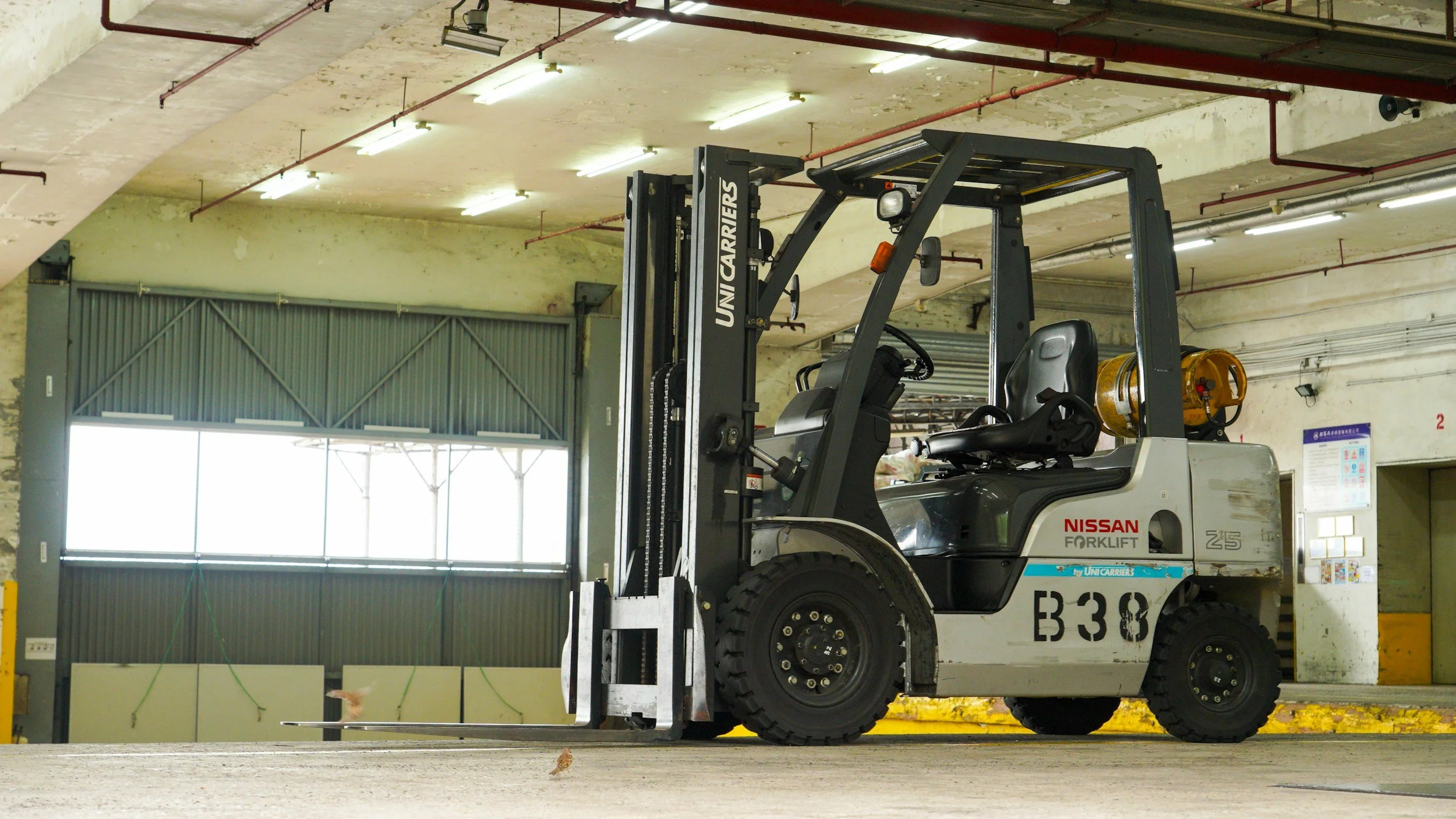
EQUIPMENT LOANS & FINANCING FOR BUSINESS ASSETS
Equipment financing is a specialized form of business lending that allows companies to acquire the machinery, technology, vehicles, and tools essential to their operations — spreading the cost over time while preserving working capital for the day-to-day demands of running and growing a business. Equipment loans and leases are available across virtually every industry and asset type, from commercial vehicles and manufacturing equipment to medical devices, restaurant equipment, and enterprise technology. Because the equipment itself typically serves as collateral, qualification requirements are often more accessible than unsecured business lending — making equipment financing one of the most efficient capital deployment strategies available to business owners at any stage of growth. At Fiduciary Financing, our advisors match you with the right lender and structure for your specific equipment need — loan, lease, or sale-leaseback — ensuring your capital is deployed intelligently. Unbiased Advice. Unmatched Access.
-
Equipment financing refers to loans and leases specifically structured for the acquisition of business equipment — tangible assets used in the operation of a business. In an equipment loan, the lender provides capital to purchase the equipment, which serves as collateral for the loan. The borrower takes ownership of the equipment and repays the loan in fixed installments over the agreed term — typically two to seven years depending on the equipment's useful life. In an equipment lease, the lender purchases the equipment and leases it to the business for a defined period, with the business making regular lease payments and having the option to purchase, return, or upgrade the equipment at lease end. A sale-leaseback allows a business that already owns equipment to sell it to a lender and immediately lease it back — converting an illiquid asset into working capital while retaining operational use of the equipment.
-
Equipment financing is well-suited for businesses across virtually every industry that need to acquire, upgrade, or replace operational equipment without a significant outright capital expenditure. It is particularly valuable for growing businesses that need to preserve working capital while scaling capacity, established businesses facing equipment replacement cycles, businesses in capital-intensive industries such as construction, manufacturing, healthcare, transportation, and food service, startups that need equipment to begin operations but lack the cash reserves for outright purchase, and businesses seeking to leverage Section 179 tax deductions or bonus depreciation on equipment purchases. Our advisors consider both the financing structure and the tax implications of each option as part of the advisory process.
-
Equipment financing qualification is generally more accessible than other business lending products because the equipment serves as its own collateral, reducing lender risk significantly. Most lenders require a minimum credit score of 600–650, though stronger scores unlock better rates and terms. Time in business requirements vary — some lenders will finance equipment for startups with strong personal credit and a business plan, while banks typically prefer two or more years of operating history. Documentation typically includes a credit application, financial statements or tax returns, an equipment quote or invoice, and occasionally a business plan. Loan-to-value ratios for equipment financing typically range from 80–100% of the equipment's purchase price or appraised value, and terms align with the expected useful life of the asset.
-
The choice between an equipment loan and an equipment lease has meaningful financial, tax, and operational implications. An equipment loan results in ownership — the business builds equity in the asset, can customize and modify it freely, and retains it at loan payoff with no further obligation. Equipment ownership also allows for depreciation deductions including Section 179 expensing and bonus depreciation. An equipment lease preserves the option to upgrade to newer equipment at lease end — valuable in industries where technology evolves rapidly — and lease payments may be fully deductible as a business expense. Operating leases keep the asset off the balance sheet, which can be advantageous for businesses managing leverage ratios. The right structure depends on your industry, how quickly the equipment will depreciate or become obsolete, your balance sheet objectives, and your tax strategy. Our advisors evaluate all of these factors in the context of your complete financial picture.
-
Equipment financing offers compelling advantages: the ability to acquire essential business assets without a major upfront cash outlay, predictable fixed payments that align with the revenue-generating capacity of the equipment, collateral-based qualification that is often more accessible than unsecured business lending, and potential tax advantages through depreciation and deduction strategies. The primary considerations include total cost of financing over the loan or lease term — which exceeds the outright purchase price — the risk of financing equipment that becomes obsolete before the term ends, and the varying quality of terms across equipment lenders, which makes comparing products essential. Our advisors identify the most competitive equipment financing available across our network and evaluate loan versus lease structures against your specific tax and operational circumstances.
-
Equipment financing is not just a capital access tool — for high-income business owners and W-2 earners, it can be one of the most powerful tax reduction strategies available under current federal law. The One Big Beautiful Bill Act, signed in 2025, permanently restored 100% bonus depreciation on qualified business property under IRC §168(k). This means a business that finances the purchase of qualifying equipment can deduct the full equipment cost in Year 1 — not over a multi-year depreciation schedule — generating an active loss that can offset W-2 wages, business income, IRA and pension distributions, Roth conversion income, and other ordinary income.
Because up to 90% of the equipment purchase price can be financed through a lender while 100% of the total equipment cost remains deductible in Year 1, the resulting first-year tax deduction can be approximately seven times your initial cash outlay. For a business owner with $1,000,000 in gross income, this strategy has produced a net first-year cash savings of over $109,000 — reducing an effective federal tax rate from 24.3% to 1.2% in a single tax year. For a W-2 employee earning $500,000, the same strategy has generated net first-year cash savings of over $38,000 with an effective rate reduction from 21.0% to 2.0%.
This strategy requires material participation in the equipment business — generally more than 100 hours of qualifying activity per year with contemporaneous documentation — and its suitability depends entirely on each client's specific income profile, filing status, and financial objectives. Fiduciary Financing advises on the equipment financing structure. For the tax planning strategy, qualification analysis, and IRS documentation requirements, we refer clients directly to our affiliated company Nashional Tax Planning — led by Jeff Nash, CPA, CFP — who conducts a full eligibility review before any commitment is made.
Contact Nashional Tax Planning: contact@nashionaltaxplanning.com | 844-627-4829 | nashionaltaxplanning.com
Nothing in this section constitutes tax, legal, or investment advice. Consult a qualified CPA and attorney before entering into any equipment financing transaction for tax purposes.
-
The equipment financing tax strategy works through a specific business structure. The client forms an LLC that purchases qualifying heavy construction equipment — financed at approximately 90% through a lender — and leases that equipment on a short-term basis to commercial users across a nationwide network of 300+ locations managed by the program sponsor. The sponsor's technology platform matches equipment owners with qualified lessees and tracks utilization in real time, meaning no prior industry experience is required. The structure mirrors the familiar short-term rental real estate model but substitutes heavy construction equipment for real estate — with one significant advantage. Equipment is 100% eligible for first-year bonus depreciation under the permanently restored IRC §168(k) provision. Real estate, by contrast, only allows a portion of the property cost to qualify for first-year depreciation, making equipment a substantially more efficient vehicle for Year 1 tax deduction generation.
The result is a real, cash-flow-producing business that simultaneously generates a meaningful Year 1 tax reduction funded primarily through bank financing rather than out-of-pocket capital. Because the One Big Beautiful Bill Act made 100% bonus depreciation permanent — not temporary — the strategy is repeatable across successive equipment purchases in subsequent years, meaningfully expanding the cumulative tax benefit for clients who implement it as part of a long-term financial plan.
Fiduciary Financing can facilitate the equipment financing component of this strategy — identifying the right lender, structuring the loan at competitive terms, and coordinating the financing closing. The tax planning, material participation documentation, and IRS compliance requirements are handled exclusively by Nashional Tax Planning, whose team of CPAs and CFPs works directly alongside clients and their existing advisors to ensure the strategy is implemented correctly and defensibly.
This strategy is most appropriate for high-income business owners and W-2 earners with significant federal tax exposure who are seeking to convert a tax liability into an income-producing, balance-sheet-building business asset. To determine whether this strategy fits your situation contact Nashional Tax Planning for a complimentary eligibility review.
Contact Nashional Tax Planning: contact@nashionaltaxplanning.com | 844-627-4829 | nashionaltaxplanning.com
This content is for informational purposes only and does not constitute tax, legal, or financial advice. Eligibility for 100% bonus depreciation requires meeting all applicable IRS requirements. Excess business loss limits for 2026: $256,000 single / $512,000 married filing jointly. Tax law is subject to change. Consult a qualified CPA and attorney before implementing any tax strategy.
Our Process




Review of Financial Goals & Objectives As licensed fiduciaries, we evaluate your complete financial picture — credit profile, income structure, existing obligations, assets, and long-term wealth objectives — to identify the loan product and structure that genuinely serves your best interests.
Step 1Initial Consultation We start with a 30-minute consultation to understand your financial goals, current position, and what you need from your next lending decision. No pressure, no assumptions — just a focused conversation that gives us everything we need to advise you correctly.
Step 2Closing & Long-Term Relationship We support you through every step of the closing process and remain your advisor long after the ink is dry. As your financial life evolves — new properties, business growth, refinancing opportunities — your Fiduciary Financing advisor is your permanent lending partner.
Step 3Lender Curation We search across 800+ lenders to identify the most competitive product available for your specific profile and need. Where applicable, your loan may be facilitated directly through Uptiq Premier Mortgage by a Fiduciary Financing advisor who is also a licensed Loan Officer — the same advisor who evaluated your goals executes your loan.
Step 4Phone
855-627-4466
denver@fiduciary-financing.com
Address
5900 S. Lake Forest Dr., Suite 300
McKinney, Texas 75070
Business Hours
Monday – Friday: 7:00 AM – 6:00 PM CST
Saturday – Sunday: On Call As Needed